

For 35-year-old Swe Swe, sunset doesn't mean it’s time to go home and rest like everyone else. She frequently has to work overtime until dawn. Although she knows this affects her health, "overtime" is the only answer to solving the survival and livelihood difficulties for her and her family.
Swe Swe’s husband is a construction worker who earns 18,000 kyats a day, but he drinks frequently, citing exhaustion. As the person managing household affairs, Swe Swe cannot cook at home because she spends almost all her time at the factory. They have to buy food from outside, and his entire daily wage is spent on that; nothing ever reaches her hand.
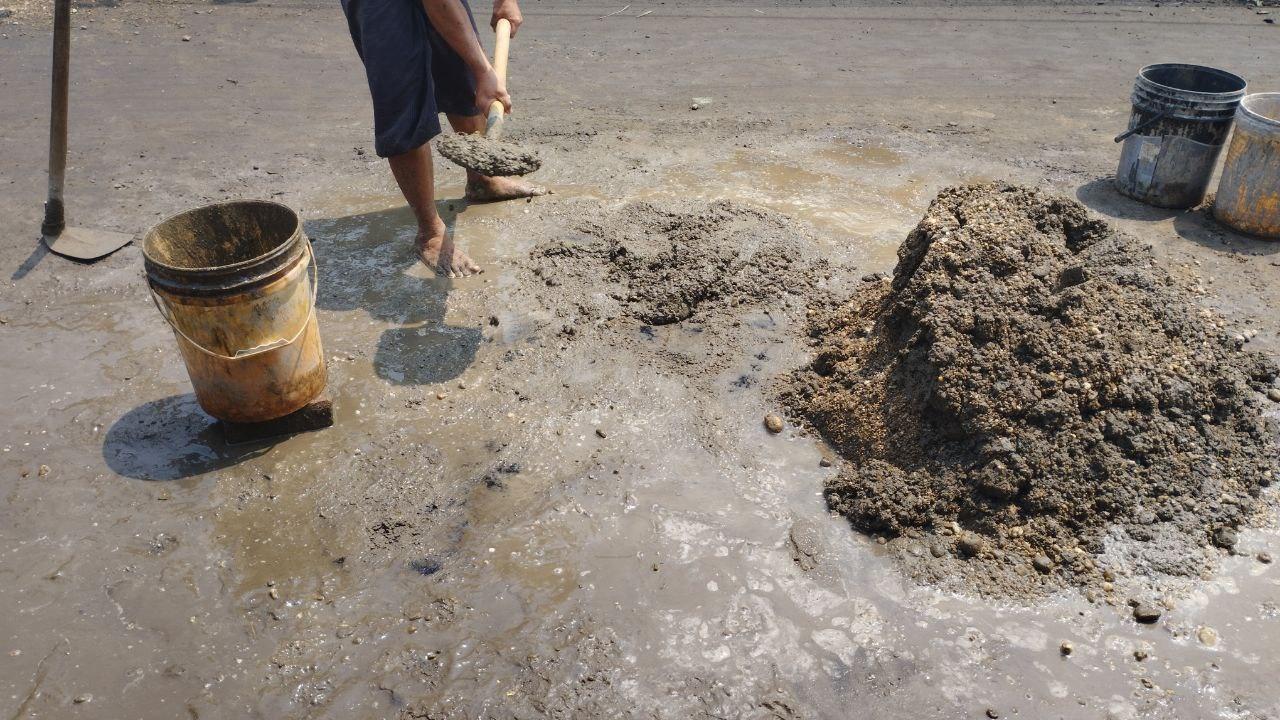
Things have become tighter this year; her 13-year-old eldest son had to take a year off from school to work at the construction site where her husband works. The three of them, Swe Swe, her husband and son live in a temporary shack made of tin roof and bamboo walls provided for construction workers. Fortunately, they don't have to pay rent. Her four-year-old younger son has been sent to live with her parents in the village. To support her parents and her young son, Swe Swe works overtime even when it’s not her shift. Only then can she set aside food costs for the three of them and send money back to her parents. Her parents’ agricultural work in the village has been unsuccessful, with almost no income for over a decade.
The Global Context and Local Reality
In the era of globalization, large companies operate production on a global scale. In developing countries like Myanmar, which seek rapid economic growth through foreign investment, an abundant labor force and low wages have become one of the primary reasons for investment. These international investments and factories create jobs for people like Swe Swe. Many people like her move from villages where agriculture and the economy are failing, to work in urban industrial zones. Most work hard and live frugally, sending support back to their struggling relatives in the villages.
This situation has been common since before 2021, but conditions for workers like Swe Swe have worsened since then. In a time when there is no strong law to protect workers or a government to enforce those laws, the exploitation by international brands and large businesses has become more evident. The precise labor value, time, and effort put in by workers like her are not recognized. The futures, health, and social lives of worker families are being sacrificed to these large businesses. There is no fair benefit received relative to the work done. Despite working full-time with great effort, why can't they escape the cycle of poverty generation after generation?
It is not because they don't try or because they are incompetent. It is because of systemic conditions and lack of social justice that aren't easily visible. If there is social justice, the class gap in society will narrow, leading to stability and peace.
The Three Pillars of Social Justice
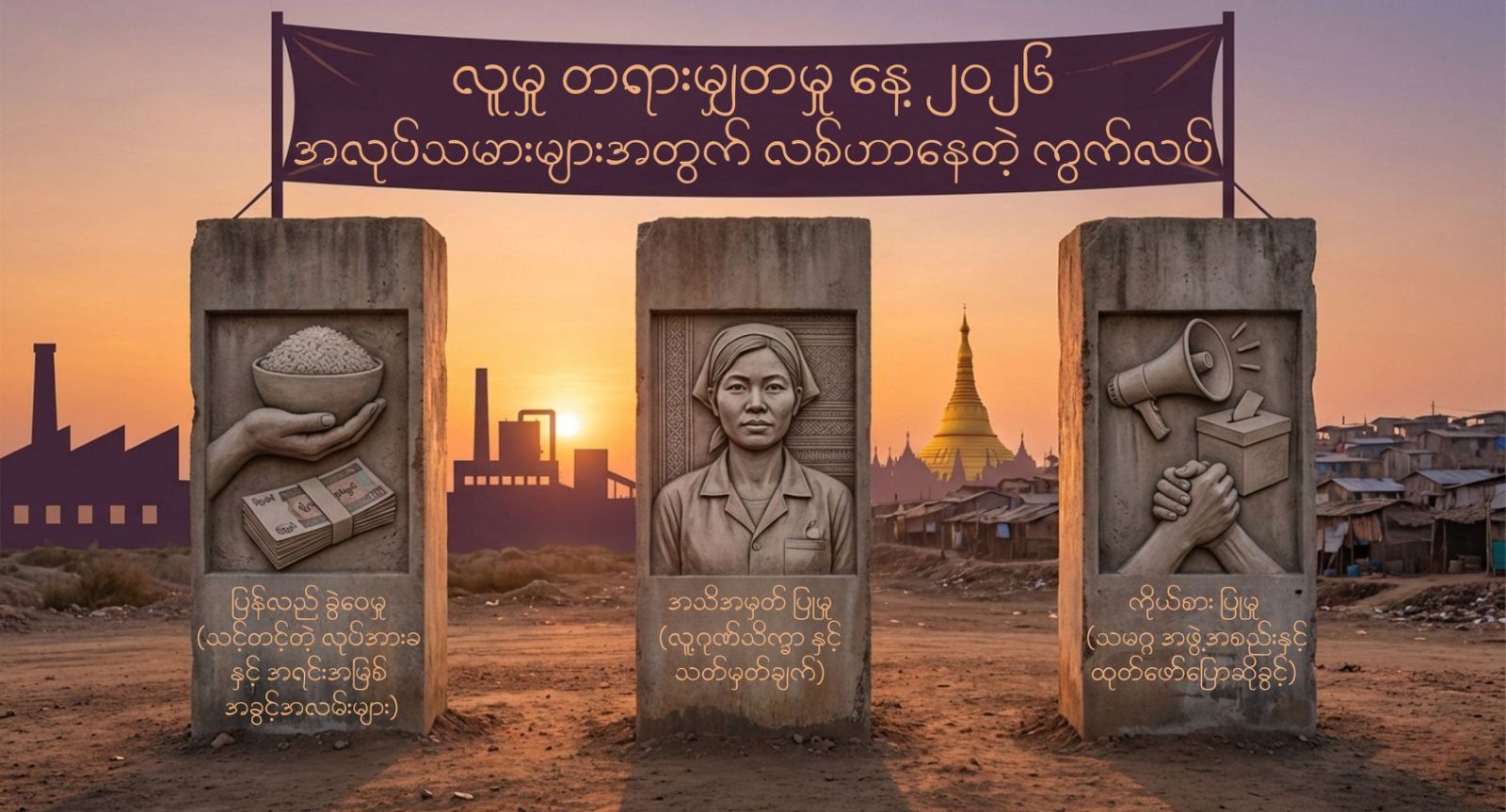
There are three main pillars that maintain the balance of social justice: Redistribution, Recognition, and Representation. These conditions are missing for Swe Swe’s family.
1. Fair Redistribution of Resources and Opportunities
- Inflation and Low Wages: While justice for everyone starts with an economically secure life, for Swe Swe and her family, the purse remains empty. Despite her hard work, her wages vanish instantly due to inflation.
- The Injustice of 10,000 Kyats: A daily wage of 10,000 kyats is nowhere near enough. Although her husband earns 18,000 kyats at the construction site, that money never reaches the family as it is spent on his personal consumption.
- The Debt Trap: Since they have no savings for emergencies, they must borrow money at a 20% interest rate from the neighborhood. This is a harsh form of resource maldistribution common in Myanmar. The wages she earns through tireless work go toward paying exploitative interest rather than her children's future.
- A Stolen Future: The most heartbreaking injustice is forcing the 13-year-old son to quit school and enter the workforce. This "seizes" the child’s ability to choose his own life and opportunities. To prevent the family from starving and to support elderly parents who have no social protection, the child's potential is traded for cheap labor.
2. Recognition: The Ignored Workforce
Recognizing each other as equals is a virtue for a just and fair society. The government must recognize workers like Swe Swe as essential economic contributors to the nation. Treating them merely as tools to be traded for wages is a social injustice.
- The Crisis of Care: Culturally, housework is seen as a woman's duty. Today, women like Swe Swe work from dawn till dusk and have no time to cook or care for children and elderly parents. Even if she could make time, it is double the exhaustion, and that domestic work is neither paid nor recognized.
- The Family Breakdown: Because she cannot care for her younger child herself, she had to send him to his grandparents. This is a "domestic labor crisis" for the separated family. While Swe Swe works excessively to support the global economic system, the crisis and loss are borne by her own family's social and economic life.
3. Representation: A Voice for Swe Swe’s Life
Swe Swe’s family lives in a tin roofed room provided by the husband's contractor. This is merely a "temporary warehouse" for workers, not a real, warm, or secure home.
- The Voice Gap: The family has no legal right to reside in that room or on that land. Once the construction project starts or ends, they must find another shelter. There are no government mechanisms or labor unions to protect their right to housing, meaning they have no representation. In this situation, it is impossible to demand the stable housing that a family deserves.
Recommendations: Overcoming the Cycle of Poverty
For the thousands of worker families trapped in poverty due to administrative and economic uncertainty, the following is recommended:
- To Multinational Corporations (MNCs): MNCs profit from the day-and-night overtime labor of workers like Swe Swe. When a worker is forced to take their child out of school because wages cannot keep up with inflation, it is a failure of the company’s commitment to "Responsible Investment". Companies must pay a "Living Wage" that includes the cost of social rehabilitation.
- To Employers: Workers are not disposable items; they are the human pillars of the economy. Providing "just enough" shelter is not sufficient. Employers must take responsibility for secure housing, support for children's education, and fair wage distribution within the household.
- To Government and International Organizations: Recognize that urban poor families are the backbone of the economy. Support and collaborate with unions and representative organizations. Intervene urgently to regulate exploitative lending (20-30% interest rates) and ensure children like Swe Swe’s son do not lose their right to education.
Conclusion
Without social justice, there is no hope for the future of society. Swe Swe wants what every mother wants: for her son to attend school, to care for her parents, and to have a warm, secure home that doesn't disappear. Currently, her labor enriches the already wealthy capitalists of the world, while her own family sinks deeper into the cycle of poverty. Social justice means breaking that cycle. It is a social system where her tireless efforts do not result in "zero," but instead lead to a life of dignity and a stable, certain future.