

By Tharapi (March 8, 2026) – Article Commemorating International Women’s Day
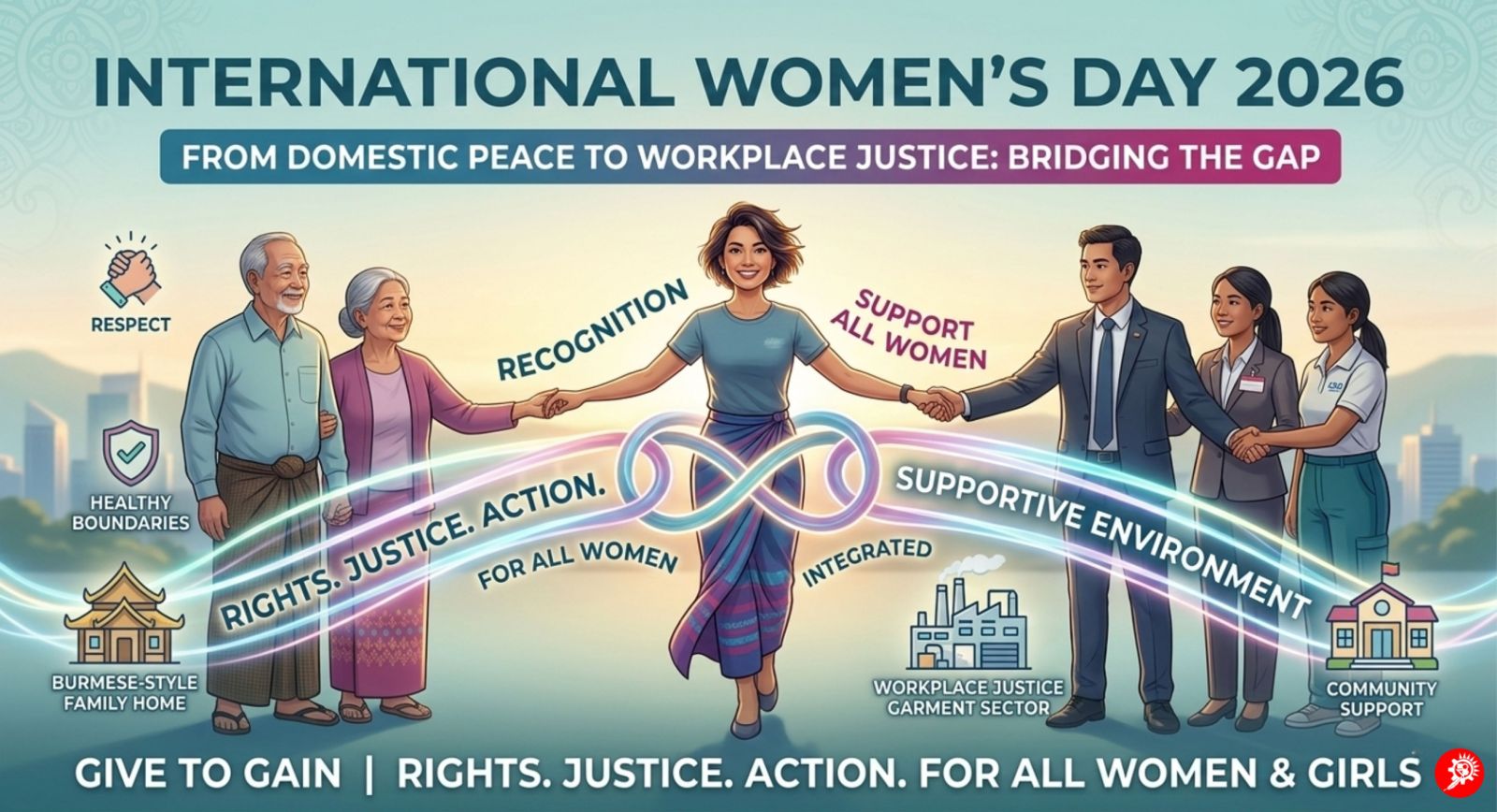
As March arrives, we often hold events to increase public awareness and collective action regarding women’s issues, gender roles, human rights, justice, and peace. During this time, I want to reflect on how the majority of women in Myanmar struggle between the traditional boundaries set by society and the pressures of the modern workplace. As a consultant working to promote international human rights standards in a country where respect for those rights is weak and traditionalism is strong, I see that the movement for gender equality is not just about having law and policy to protect but also about a personal revolution to gain rights and justice that we can start at our own family and community.
The Silent Revolution at Home
Growing up as the youngest daughter in a conservative Burmese family, I have personally experienced the "generational gap in perspectives and concepts". My father, who is nearly 80, holds firmly to the traditional view that men must lead, while my mother, in her 70s, has always taught and shaped me through the restrictive behaviors and mindsets expected of a "girl".
As someone who actively advocates for gender equality, I once tried with great enthusiasm to change my parents’ perspectives. However, every time I tried, tension arose and sometimes, it almost broke our relationship. Later on, I had to find the best way to live harmoniously within the family while still protecting my own thoughts and rights. Instead of harsh confrontation, I sought my rights through a "soft way," understanding my parents' ego and concerns. I stopped trying to force recognition from them and instead used a subtle "Give to Gain" approach. The lesson I learned from this is that for change to occur, mutual empathy is necessary, and for it to be sustainable, there must be boundaries of recognition and mutual respect within the family.
Current Workplace Conditions in Myanmar
In Myanmar’s manufacturing sector, especially in garment factories, roughly 85% of workers are women. They are the backbone of the country's economy, yet they carry a double burden (economic and social). Due to the highly stressful nature of the work, they cannot prioritize time for themselves or for their families. We see the negative consequences of this every day:
- Health Impacts: Long working hours lead to nutritional imbalances and hormonal changes caused by stress. This results in painful or irregular menstrual cycles. I empathize with this because I have also experienced it myself.
- Marriage and Work: In this changing era, many women feel they must choose between a career or a family life. Due to weak supporting laws, systems, and social cultures, married women must manage household affairs amidst workplace pressures. Even among women, it is common to hear in the neighborhood: "If you get married, don't work; if you work, don't get married," because people assume that doing both leads voids in carrying out family duty or vice versa.
- Lack of Safety: Pregnant mothers who continue working to afford the costs of a future child face difficulties taking leave. If they do take leave, they may face resentment from colleagues. There are heartbreaking reports of women suffering medical emergencies, including miscarriage and abortions at the workplace because they cannot access emergency care.
- Childcare: Even among educated staff and colleagues I know working in companies, there are still incidents where infants pass away shortly after reaching 100 days because of a single moment of neglected care while the mother is at work.
Legal Requirements
Myanmar’s current 1951 Factory Act does not yet recognize or legally protect the reproductive health needs of women in modern, high-stress production environments like the garment sector. While the Social Security Law allows for paid maternity leave (6 weeks before and 8 weeks after birth), it is not yet sufficient for the health of the mother and child. Specifically, there are no exact legal provisions for breastfeeding time, childcare, or menstrual leave. Although the WHO works to inform people of the benefits to both mother and child when working mothers are given paid maternity leave, there are still gaps in taking action.
There is international labour standards already exist to fill these legal gaps:
ILO Convention No. 183 (Maternity Protection): This is a modern standard to protect mother and child health. It mandates at least 14 weeks of maternity leave, protects against dismissal during pregnancy, and guarantees the right to return to the same position.
ILO Convention No. 156 (Workers with Family Responsibilities): This is for workers balancing family care and work. It aims to prevent workplace discrimination and ensure a balance between employment and family duties without conflict. It calls for the creation of childcare centers and flexible working hours.
Learning from Neighboring countries in the region
Currently, our neighboring Southeast Asian countries have accepted that recognizing and protecting women is also economically beneficial:
- Vietnam: Under the 2019 Labor Code, 6 months (24 weeks) of maternity leave is provided. Starting July 2026, there is a plan to increase this by giving one additional month if give birth a second child. Furthermore, the government provides tax reductions for businesses that employ a high percentage of female workers.
- Philippines: Under the 2019 maternity law, women receive 105 days (15 weeks) of paid leave, with an option for an additional 30 days of unpaid leave. Solo mothers receive an extra 15 days of paid leave.
- Indonesia: Under the 2024 Law on Maternal and Child Welfare, 3 months of paid leave is provided. Additionally, Law No. 13 (2003) Article 81 entitles female employees experiencing menstrual pain to 2 days of paid leave per month.
- Thailand: Under the new 2025 law, maternity leave has increased to 120 days, and fathers receive 15 days of leave for childcare. Women are also granted 1 day of menstrual leave per cycle.
Our Collective Responsibility
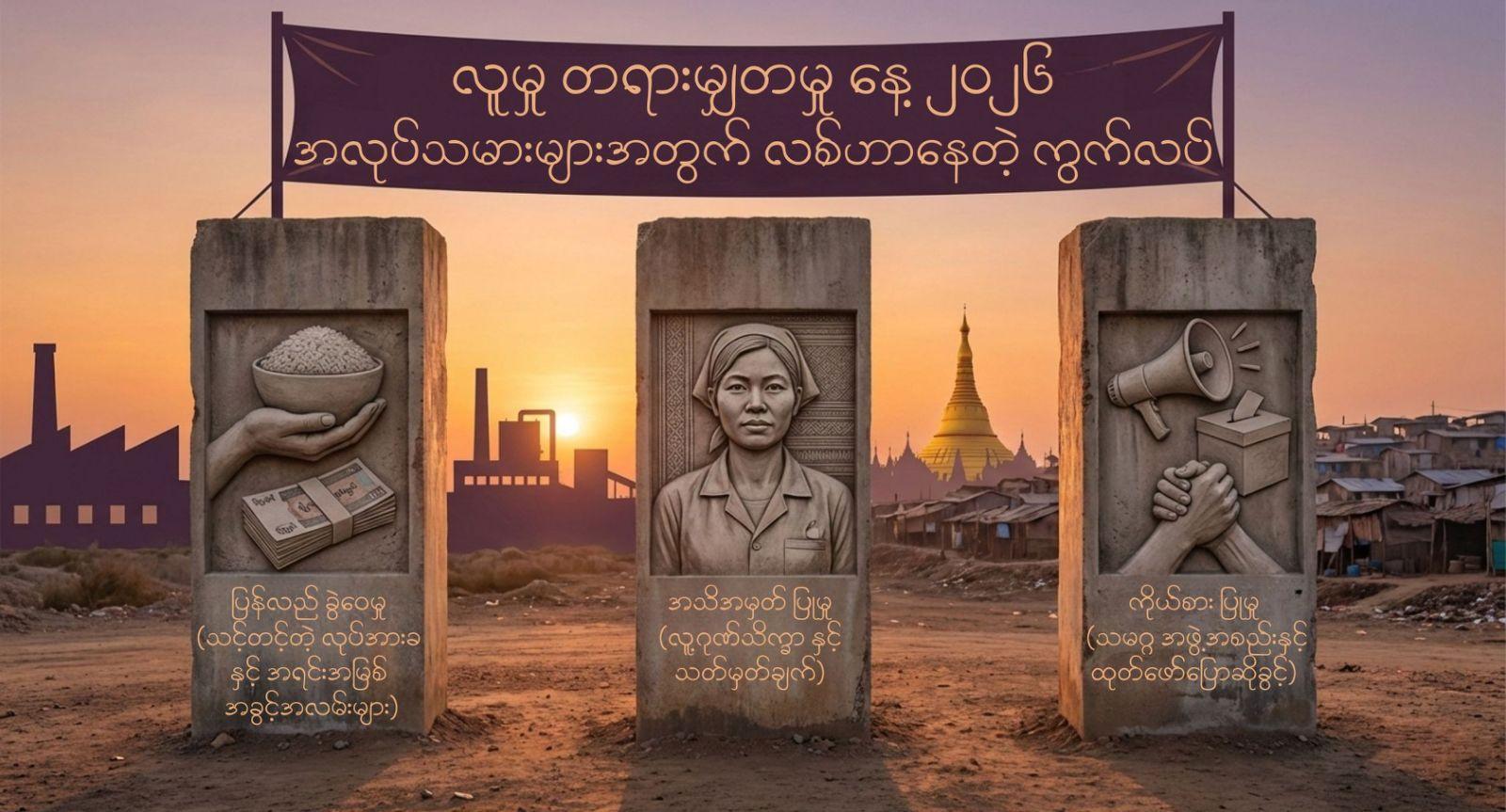
After looking at these conditions as a whole, I have a request for the government, employer associations, trade unions, and social organizations for this International Women's Day. We must see women not just as important workers supporting the national and global economy, but also as a human being with health needs, who are the "hands that rock the cradle" and raise future generations.
To achieve a socially just, stable, harmonious, and sustainably developed society, we must stop pressuring girls to "hold back" within traditional restrictive mindsets. I urge communities, families, and relatives to support and protect them, and have the legal system to provide protection.
References:
- WHO – Providing Maternity Leave
- Maternity and paternity leave policy in Vietnam
- Philippine labour law and employment – Maternity leave
- Indonesia: Law on maternal and child welfare
- Menstrual Health: In East Asia and the Pacific
- Thailand New Labour Protection Act (No. 9) Key Amendments